Last updated November 21, 2026
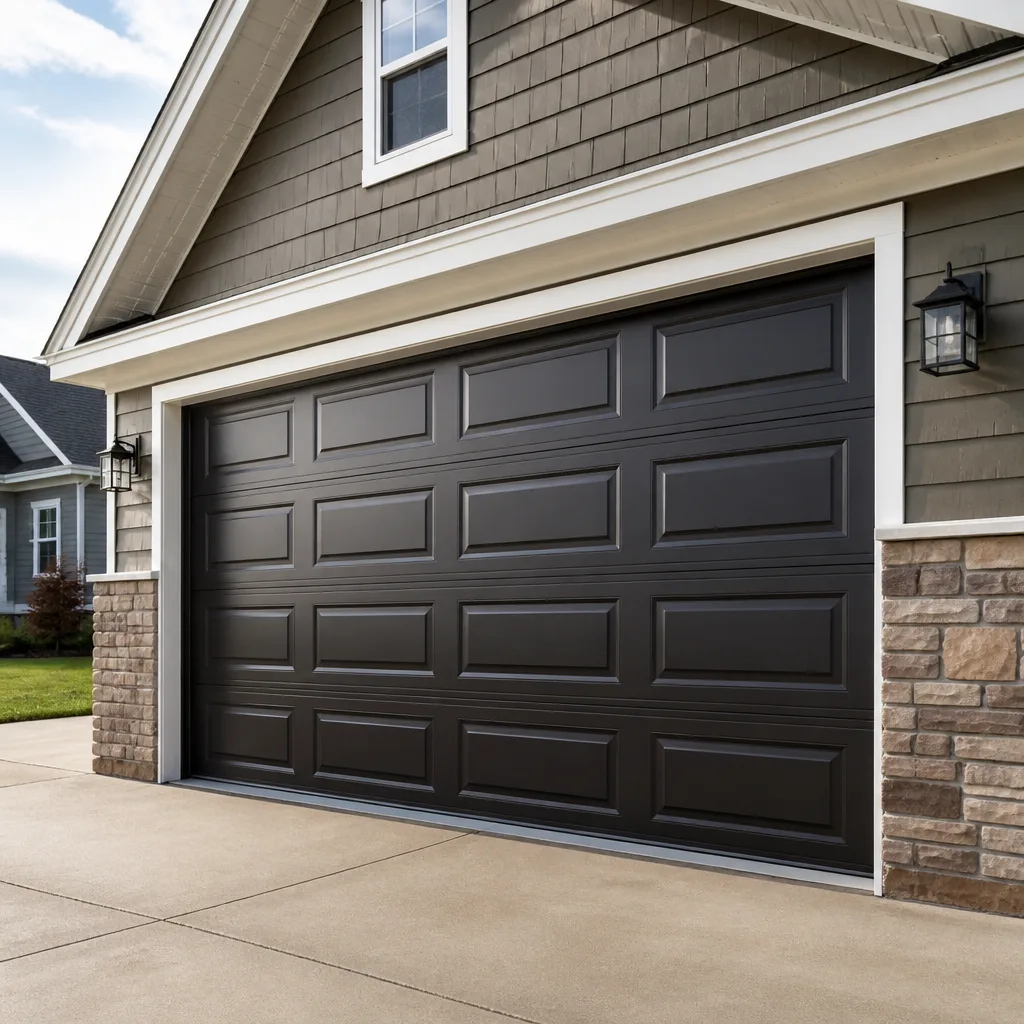 Raised-panel steel
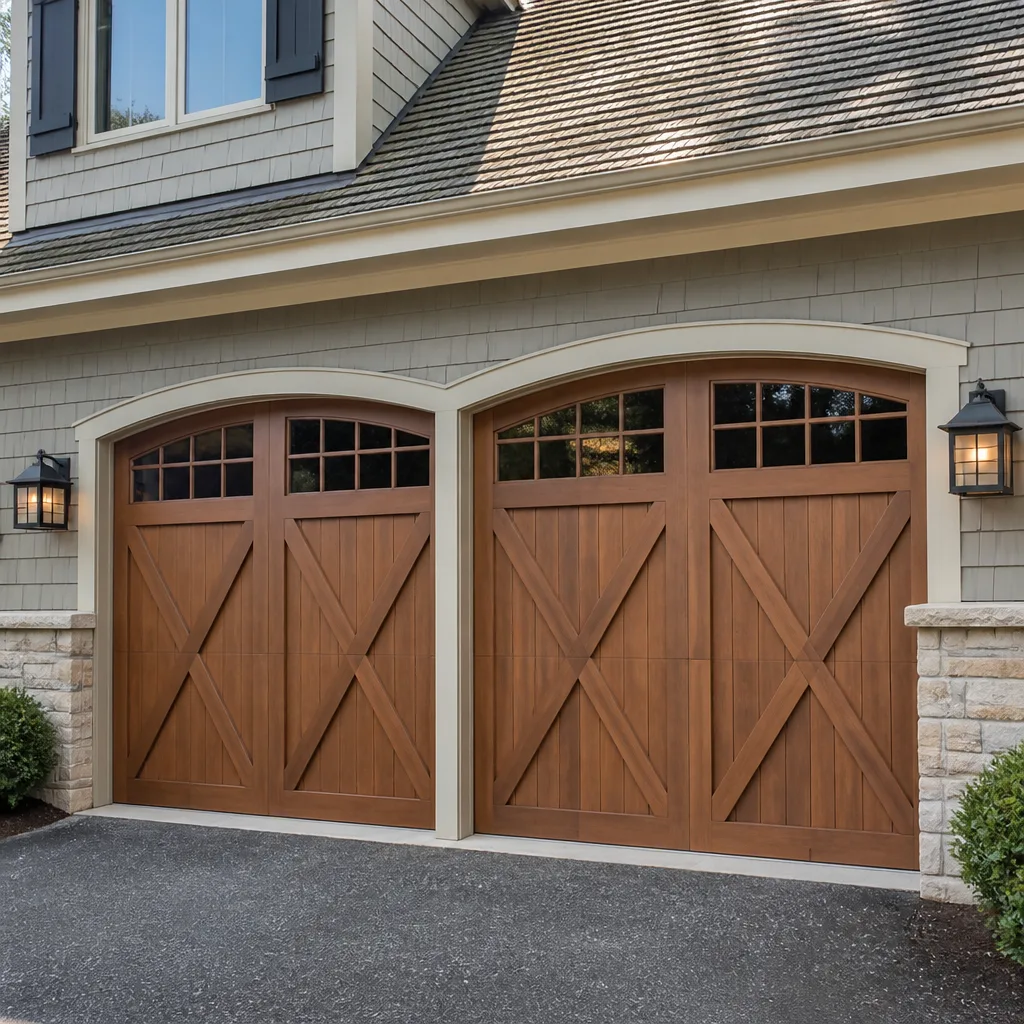 Carriage house
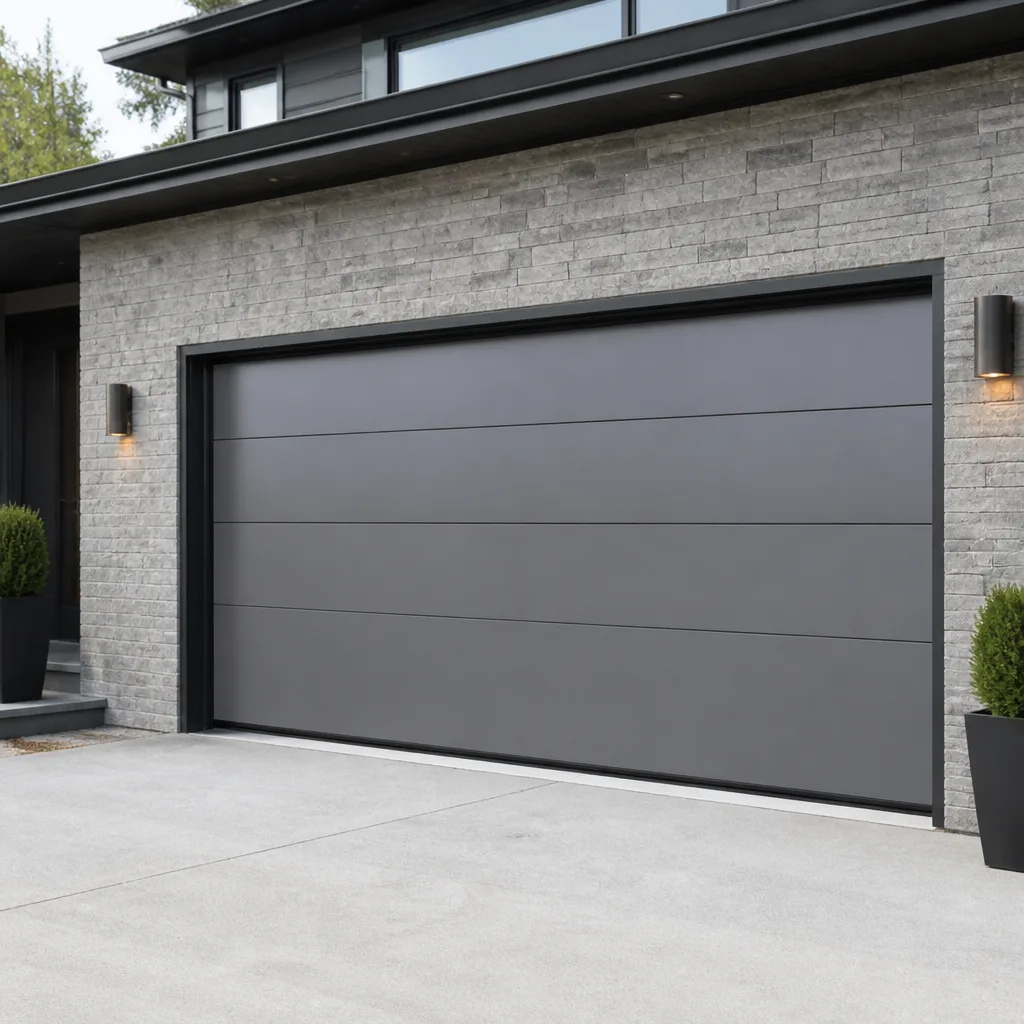 Modern flush
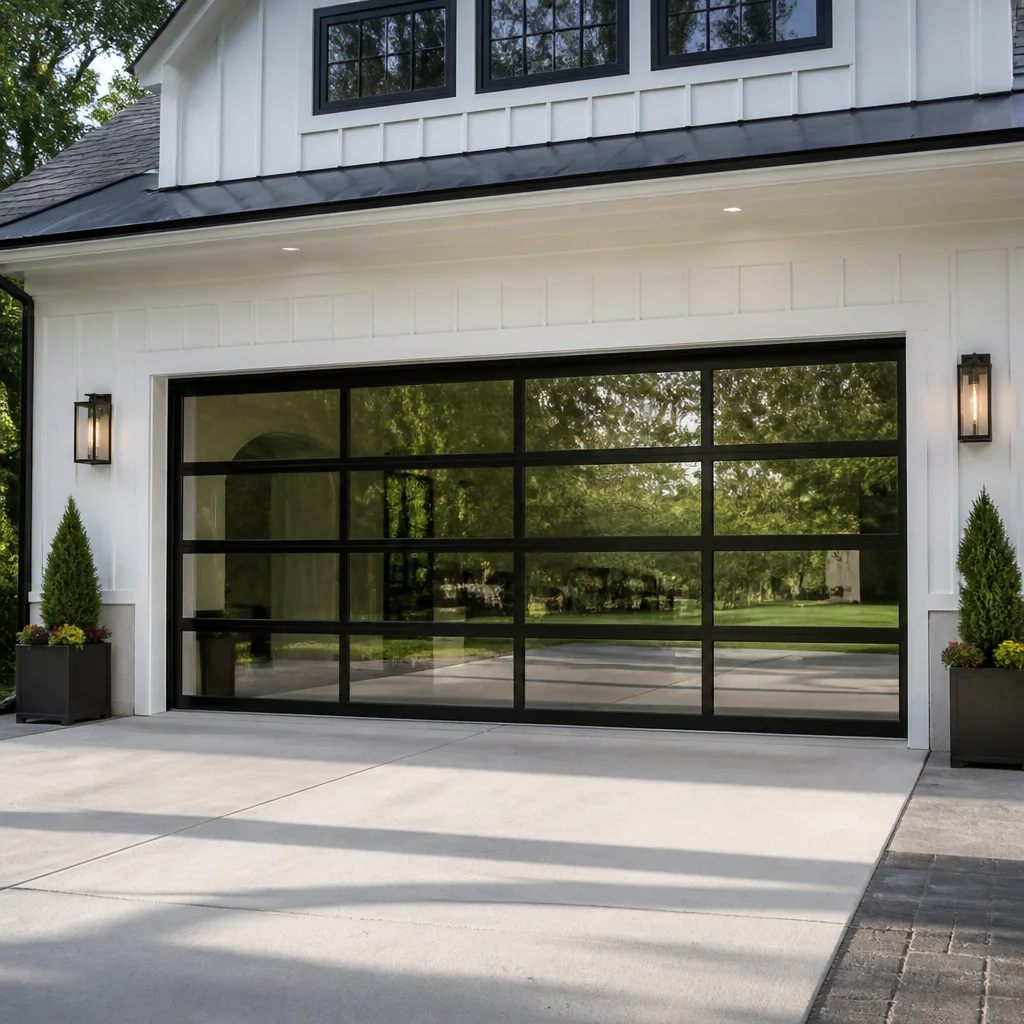 Full-view glass
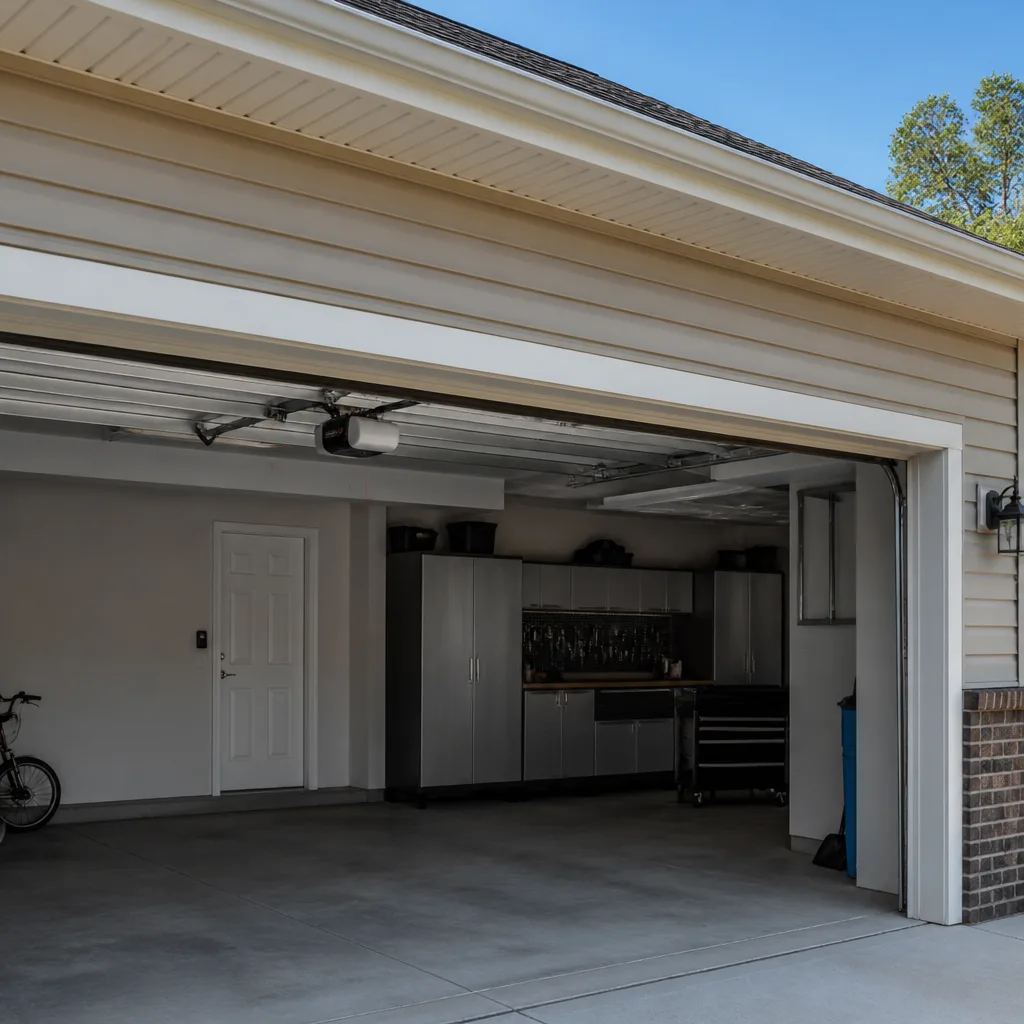 LiftMaster openers
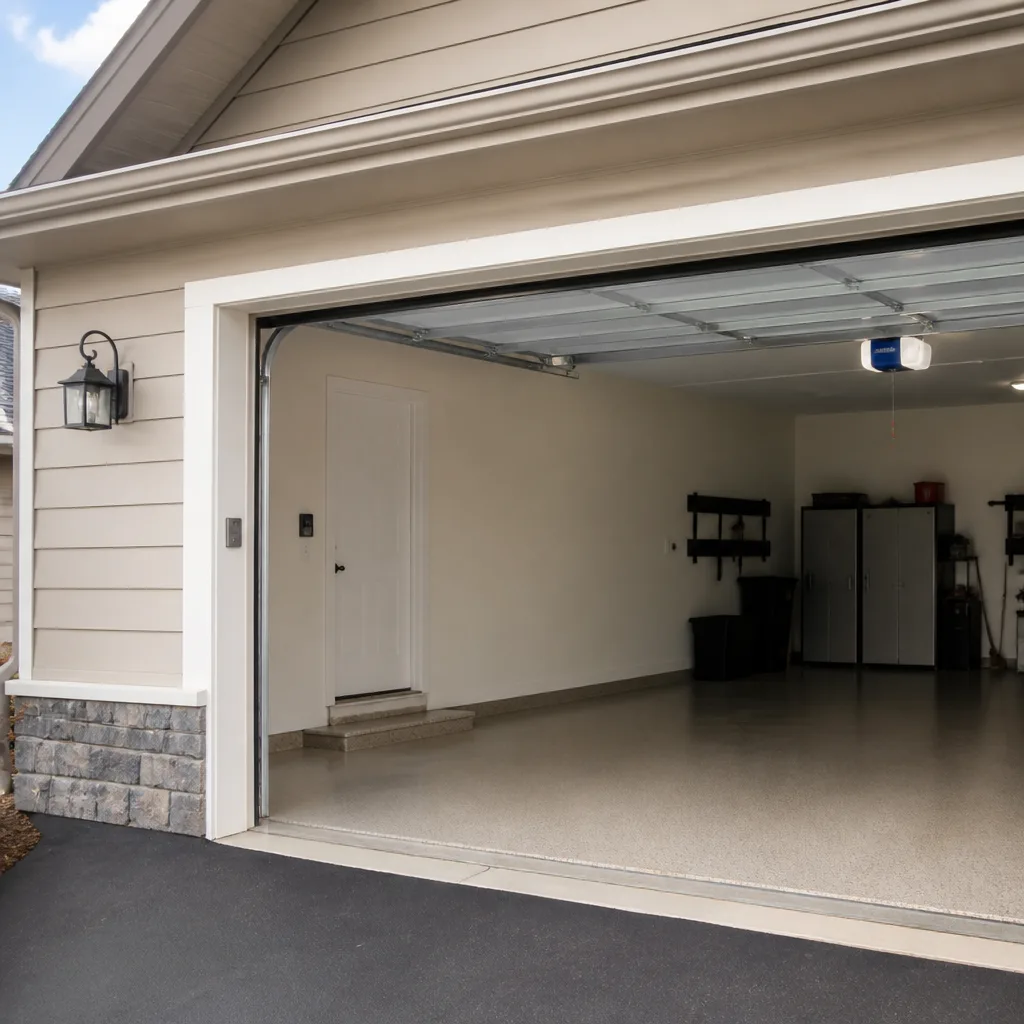 Chamberlain openers
Full 25-point door and opener safety check with every visit - springs, cables, rollers, tracks, and your LiftMaster or Chamberlain opener included
You get a price before we start. It does not change when the pro arrives.
Get your free estimateHow to Hire a Garage Door Contractor in East Boston: A Step-by-Step Guide
In Massachusetts, anyone can show up with a truck and a spring tool and call themselves a garage door technician. There’s no state trade license specific to this work. Here’s how to tell a trained tech from someone who watched three YouTube videos.
That blank spot on the regulatory map is the whole problem. A plumber has to be licensed. An electrician has to be licensed. The person winding the torsion spring above your car, the one holding enough stored energy to break a bone, carries no state-issued garage door credential at all. Which means the filter that keeps you safe isn’t the state. It’s you. Over this guide we’ll walk through what Massachusetts actually does require, the exact questions that separate a brand-familiar technician from a generalist, how to read a quote line by line, and the Boston-area red flags that should stop a job before it starts. East Boston homeowners deal with older housing stock and tight lots, and the vetting approach here respects that.
Quick Answer
To hire a garage door contractor in East Boston, verify the business registration and insurance documentation, ask brand-specific questions about your door and spring system before anyone arrives, request an itemized written quote after an in-person inspection, and confirm whether the company stocks common parts locally or orders them. Because Massachusetts has no garage door-specific trade license, your own vetting is the only quality filter, so ask direct questions and walk away from anyone who quotes without looking at the door.
Styles & brands we work with
- Raised-panel steel
- Carriage house
- Modern flush
- Full-view glass
- LiftMaster openers
- Chamberlain openers
Table of Contents
- What Massachusetts actually requires for garage door work
- The documentation worth asking for
- Questions that separate brand-familiar technicians from generalists
- How to read a garage door quote
- How to tell if a company stocks parts locally
- Boston-area red flags specific to this market
- What an in-person inspection should cover
- Common mistakes to avoid
- When to call a professional
- Frequently asked questions
What Massachusetts Actually Requires for Garage Door Work
Massachusetts does not issue a garage door installer or technician license. That’s the single fact that shapes every hiring decision you’ll make here. No agency checks a spring setter’s competence before they touch your door, and no state exam covers torsion math, cable safety, or opener force calibration. You’ll want to confirm the current rule with your city’s building department, because permit requirements vary and they change, but the core regulatory reality is this: the trade is largely unregulated at the state level.
What the state does regulate is the business itself. A legitimate contractor operating in Massachusetts should be registered to do business and should carry insurance that covers the work. Those aren’t garage door credentials, but they’re the paper trail that tells you a company is a real operating entity that can be held accountable if something goes wrong on your property.
Here’s the part most homeowners miss. Because there’s no competency standard, the burden of judging technical skill shifts entirely onto the questions you ask. A general handyman could be registered and insured and still not know the difference between a torsion spring and an extension spring, or how a Wayne Dalton Torquemaster system behaves completely differently from a standard torsion setup. Registration tells you the company is legitimate. It tells you nothing about whether they know a two-inch torsion spring from a two-and-a-quarter.
So treat the paperwork as the entry requirement, not the finish line. Anyone operating in East Boston should clear that bar easily. The real sorting happens in the conversation that follows, and that’s where this guide spends most of its time.
The Documentation Worth Asking For
Ask for three things before you book, and don’t feel awkward about it. A professional expects these questions and answers them without friction. A company that gets defensive when you ask for a business registration or a certificate of insurance is telling you something useful.
- Business registration. Ask how the business is registered in Massachusetts. You’re confirming they’re a legitimate operating entity, not a guy with a magnetic sign. You can cross-check the name against the state’s business records yourself.
- Proof of insurance. A current certificate of insurance, or general liability coverage, matters on a job that involves a heavy door, stored spring energy, and the area directly around your car. If damaged property or an injury on your property is uninsured, you’re exposed. Ask for the certificate directly rather than accepting a verbal yes.
- A written scope before work begins. Not a text message estimate. A document that states the parts, the labor, and the total. This is the one that protects your wallet, and we’ll come back to it in detail below.
Notice what’s not on this list: a garage door license, because there isn’t one to produce. Anyone claiming a Massachusetts “garage door license” number specific to the trade is either confused or bluffing. Ask what agency issued it and watch the answer. There won’t be a clean one.
What you can ask about instead is technician experience. Our technicians have up to 15 years of experience, and “how long has the person coming to my door been doing this specific work” is a fair question for any company you call in East Boston. A company proud of its people will answer it directly.
Questions That Separate Brand-Familiar Technicians from Generalists
This is the heart of the matter, and here’s a specific test you can run before anyone shows up. When you call, describe the spring system on your door and see what happens. Do they ask you a follow-up question? Do they know the difference between a torsion setup with a center-mounted spring and an extension spring system with springs running above the tracks? Can they tell you, over the phone, roughly what to look for to identify which one you have?
A trained technician has a mental model of your door before they arrive. A generalist hears “spring” and shows up to figure it out on your driveway. The gap between those two shows up in time, safety, and how often the first visit actually fixes the problem.
Because doors come in every brand, the second test is brand familiarity. Ask which brands they work on. A company tied to one nameplate will either pass you off or improvise. We work on Genie, Clopay, Amarr, Wayne Dalton, and the rest of the major names, and that range matters in East Boston’s older housing stock, where you’ll find a Clopay door from one era sharing a driveway with a Wayne Dalton from another. Old or new, the answer to “have you seen this system before” should be yes.
Questions worth asking on the call:
- “What spring system do you expect on a door like mine, and what tells you that?”
- “Do you carry parts for my brand, or would you need to order them?”
- “What’s the difference between repairing this and replacing it?”
- “Will the person who inspects it be the person who does the work?”
- “Can you explain how the opener’s safety reverse should behave?”
You’re not looking for a job interview. You’re listening for whether the answers are specific or vague. A vague answer over the phone usually becomes a vague diagnosis at the door.
How to Read a Garage Door Quote
A quote can be written two basic ways, and the difference changes what you actually pay. One itemizes parts and labor separately. The other gives you a single bundled flat rate with “labor included.” Both can be legitimate, but you should know what the second one hides.
When labor is bundled into a flat rate, the parts markup is invisible. A flat rate of $400 for a spring replacement could be $180 in parts and $220 in labor, or $60 in parts and $340 in labor. You can’t tell which. That’s not automatically a scam, but it removes your ability to see what the parts actually cost, and it makes it hard to compare two quotes that are structured differently.
An itemized quote lets you see both halves. That transparency is worth asking for even when the company usually quotes flat-rate. “Can you break out the parts and labor for me” is a reasonable request that tells you a lot about how a company operates.
These are typical estimated ranges for East Boston, and they’re estimates, not a promise. Compare them to what you’re quoted:
- Replacing one torsion spring: typically $150-$350, and a matched pair is usually replaced together, so a pair runs about twice a single.
- Torsion spring pair, both replaced: typically $300-$700, depending on spring size and door configuration.
- Safety cable and hardware refresh: often bundled into a spring job, worth asking about separately if it’s not itemized.
- Opener repair or replacement: ranged by system type, so ask what’s driving the estimate.
A few things lower the final number and a few raise it. Door height, spring type, and ease of access all make a difference. Whatever the range, the written estimate sets the price, and it should be agreed before the technician starts. Ask directly: “Will this number change once you’re here, and if so, what would cause it?” You want that answer before the work begins, not after.
How to Tell if a Company Stocks Parts Locally
For a same-day or next-day repair, the difference between a stocked part and an ordered one is the entire job. This distinction gets glossed over constantly, so it’s worth understanding how the parts pipeline actually works before you’re in a hurry.
Some companies keep common parts on hand, things like standard torsion springs, rollers, hinges, and certain opener components, and can complete a straightforward repair on the spot. Others order everything and schedule the repair for when the part arrives. Both can produce a good result. Only one gets you a working door today. When you call, ask plainly: “Do you have the part for this, or are you ordering it?” A company that keeps inventory can answer without checking a supplier, and a company that doesn’t will be candid about the lead time.
There’s a third option worth knowing. Some homeowners want the parts and the guidance, not a service call, and choose to handle a smaller job themselves. Our garage door parts service exists for exactly that, giving a hands-on homeowner direct access to components rather than forcing a full labor call. If you’re replacing a roller or a hinge on a Craftsman door in East Boston, sourcing the part directly is a legitimate path. If it’s a spring or a cable, read the next paragraph carefully.
Stored energy in a garage door spring is genuinely dangerous. A torsion spring under tension can cause serious injury if it releases while you’re handling it. We don’t give step-by-step instructions for winding or replacing springs ourselves, and we recommend you don’t attempt it either. The same goes for a frayed or snapped lift cable, which can whip with force. On those repairs, the right answer is a trained professional, full stop, no matter how mechanically confident you are. When in doubt on any spring or cable work, call us rather than the toolbox.
Boston-Area Red Flags Specific to This Market
Some warning signs are universal. Others show up more in a dense, heavily traveled market like East Boston, where a short car ride or a strong online profile can make a company look more local than it is. These are the ones we’d want a neighbor to know.
- A quote without an in-person inspection. A real diagnosis requires eyes on the door. Anyone giving you a firm number over the phone without seeing the spring, the tracks, and the opener has no idea what they’re pricing. Expect a visit before a final quote.
- A review profile that doesn’t match the street. Read where reviews are from. A business with thousands of reviews clustered far from the Boston area, or reviews that mention other states, may be routing your call somewhere far away. Look for local signals that match your area.
- No verifiable address. A company without a real operating address, or one listed as a parking lot or a mailbox, is harder to hold accountable. Cross-check the name against the address you’re given.
- Pressure to sign before you understand the quote. A legitimate company explains the parts and lets you decide. Urgency that builds around a signature, rather than around a broken spring, is a sales tactic, not an emergency.
- Vague answers on brand. If a company can’t tell you how they’d approach a Wayne Dalton or an Amarr door, they’re generalists selling you their time.
Trust the pattern, not the single data point. A company that clears these checks generally and still has one odd detail on a review is different from one that fails three of them at once.
What an In-Person Inspection Should Cover
When a technician arrives, you should see a methodical walk-through, not a quick glance and a verdict. The inspection is where a trained technician earns the trust a generalist can’t. Here’s roughly what a thorough check looks like.
- Door movement. They should raise and lower the door by hand (with the opener disconnected) to feel for balance and binding. A door should move smoothly. A door that’s fighting back has a spring or balance issue worth naming.
- Springs and cables. They should look closely at both, checking for wear, and they should name the system they’re looking at, torsion or extension, by type. This is your second brand-familiarity test. If the answer changes once they’ve looked, that’s a red flag.
- Track, rollers, and hinges. Loosened track bolts, worn rollers, and strained hinges should be pointed out, not silently billed for later. Ask what needs replacing now versus what can wait.
- The opener. They should test the safety reverse and explain what they find. A connected opener, a legacy Craftsman, or a Chamberlain in a smart-home setup all get the same check.
- The quote. After the walk-through, they should hand you a written, itemized quote and wait for your agreement before starting.
A professional inspection is brief and follows a pattern. If the technician is guessing, or skipping steps because they’re in a hurry, that’s information you can use.
Common Mistakes to Avoid
- Accepting a phone-only quote. A number given without an inspection is a guess dressed as an offer. Expect a visit and treat a firm phone price as a warning sign rather than a bargain.
- Not asking which spring system you have. A great way to test whether the person on the phone actually knows garage doors. If they can’t describe it before the visit and can’t identify it after, you’ve learned something.
- Comparing a bundled flat rate to an itemized quote as if they were equal. One hides the parts markup. Ask both companies to show you parts and labor separately so the comparison is real.
- Skipping the insurance question. In a state with no garage door license, insurance is your protection on a job around a heavy door and your vehicle. Ask for the certificate before the work, not after.
- Assuming a company stocks parts just because it does repairs. Many repair companies order parts and schedule the work for when they arrive. If you need it fixed today, confirm what’s actually on hand.
- Letting a same-day repair be handled by a first-time brand contact. Your door is a specific system. If a company’s never seen a Wayne Dalton Torquemaster or an Amarr door in East Boston, the first visit may not be the last.
- Scheduling without a written, agreed estimate. The number you agree to before work starts is the price. If there’s no paper for it, there’s nothing holding them to it afterward.
When to Call a Professional
Some garage door problems welcome a steady DIY hand. A squeaky roller, a bent hinge, a remote that needs reprogramming, these are fine to tackle yourself, and sourcing the parts directly makes it easy. Other problems are a different category entirely. A snapped spring, a frayed or snapped lift cable, an opener that won’t reverse safely, or a door that’s dropped off one side of its track can all cause injury to you or someone in the garage. Those are jobs for a trained professional, and no licensing law changes the physics involved.
If you’re in East Boston and you’re weighing repair against replacement, or you just aren’t sure which, that’s the moment to call. East Boston Garage Door Repair offers free estimates in East Boston. Call (877) 367-9149 and we’ll walk you through what the job actually involves, quote it in writing, and agree on the price before anything starts. We’d rather tell you what makes sense than sell you what doesn’t.
See the difference
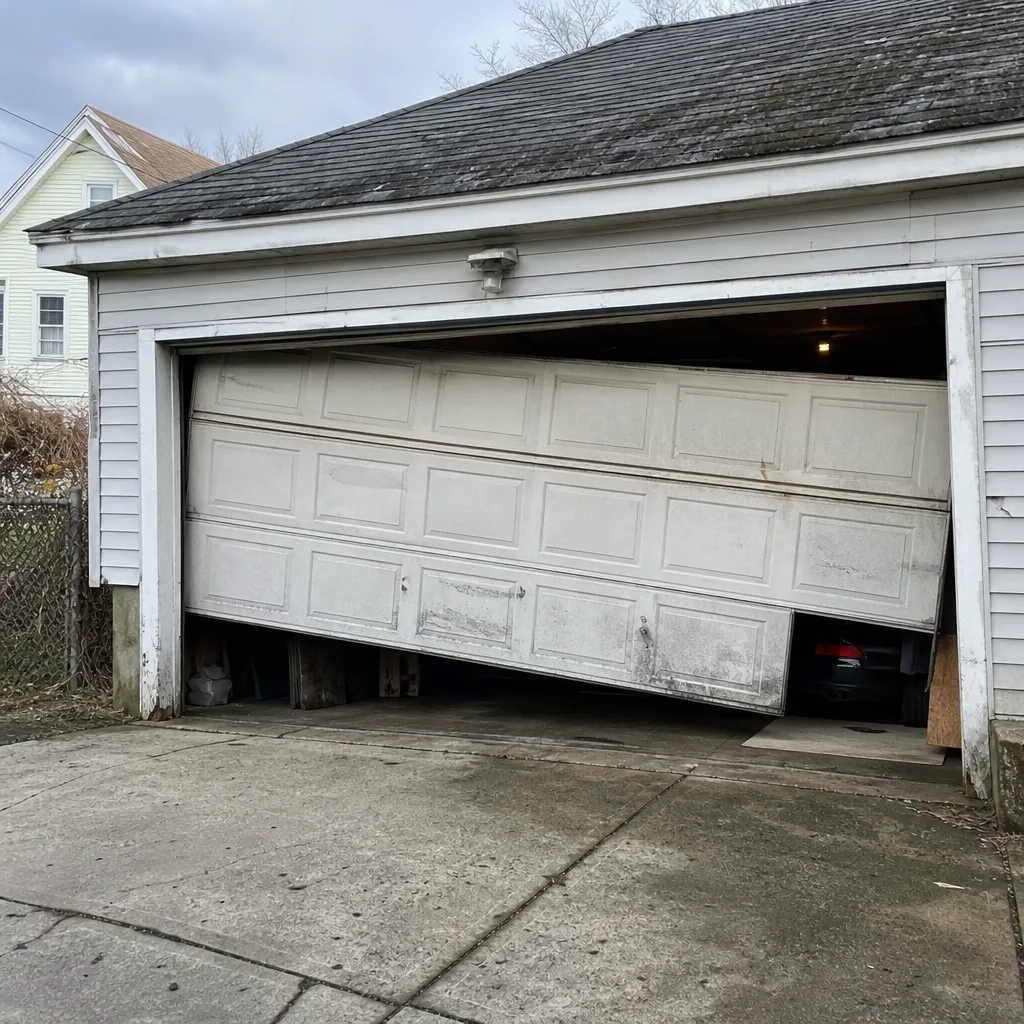 Before
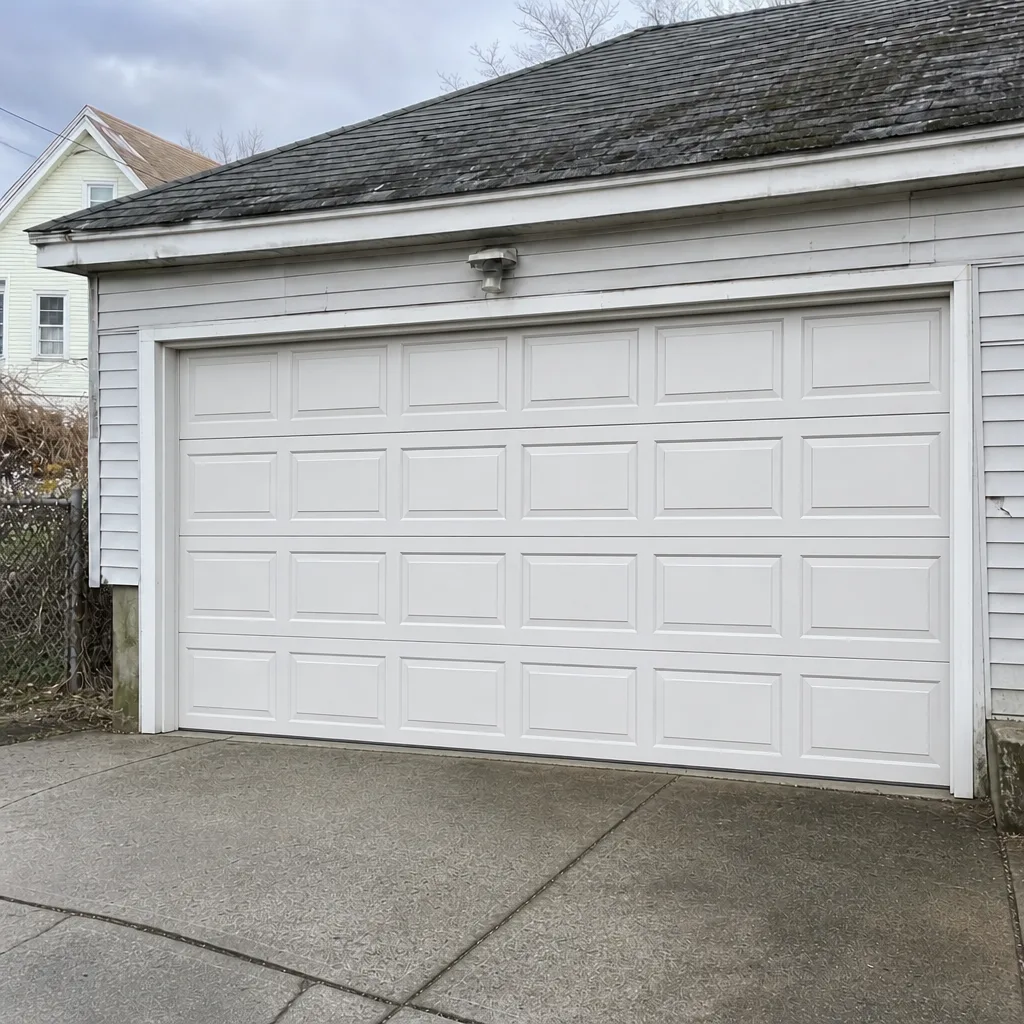 After
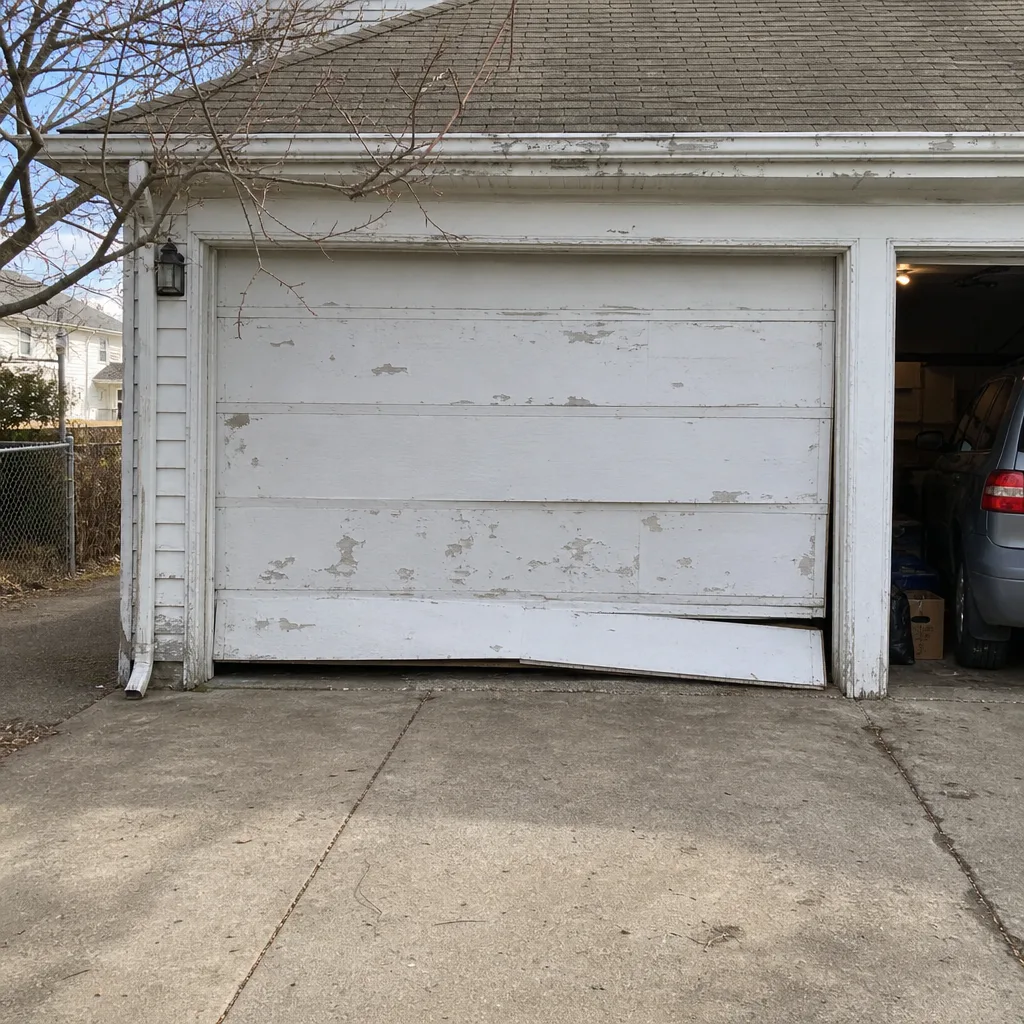 Before
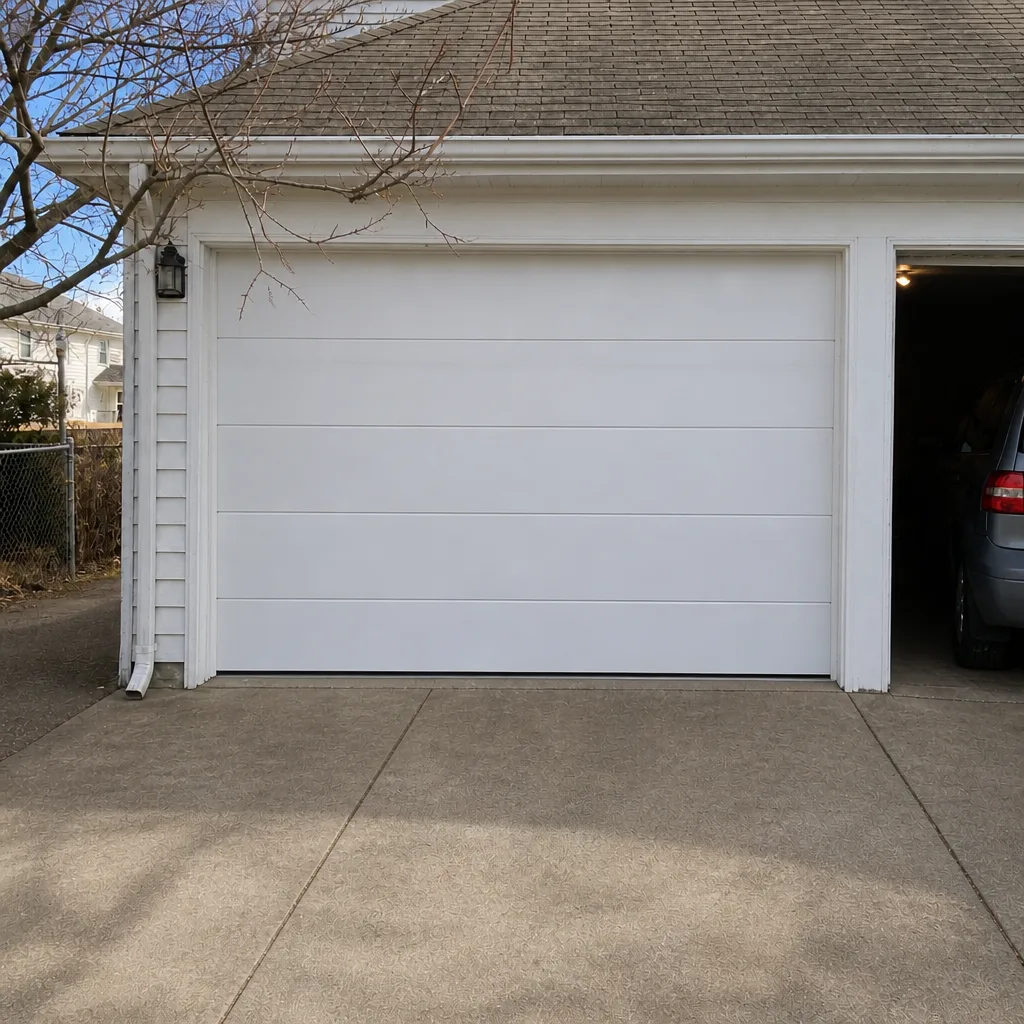 After
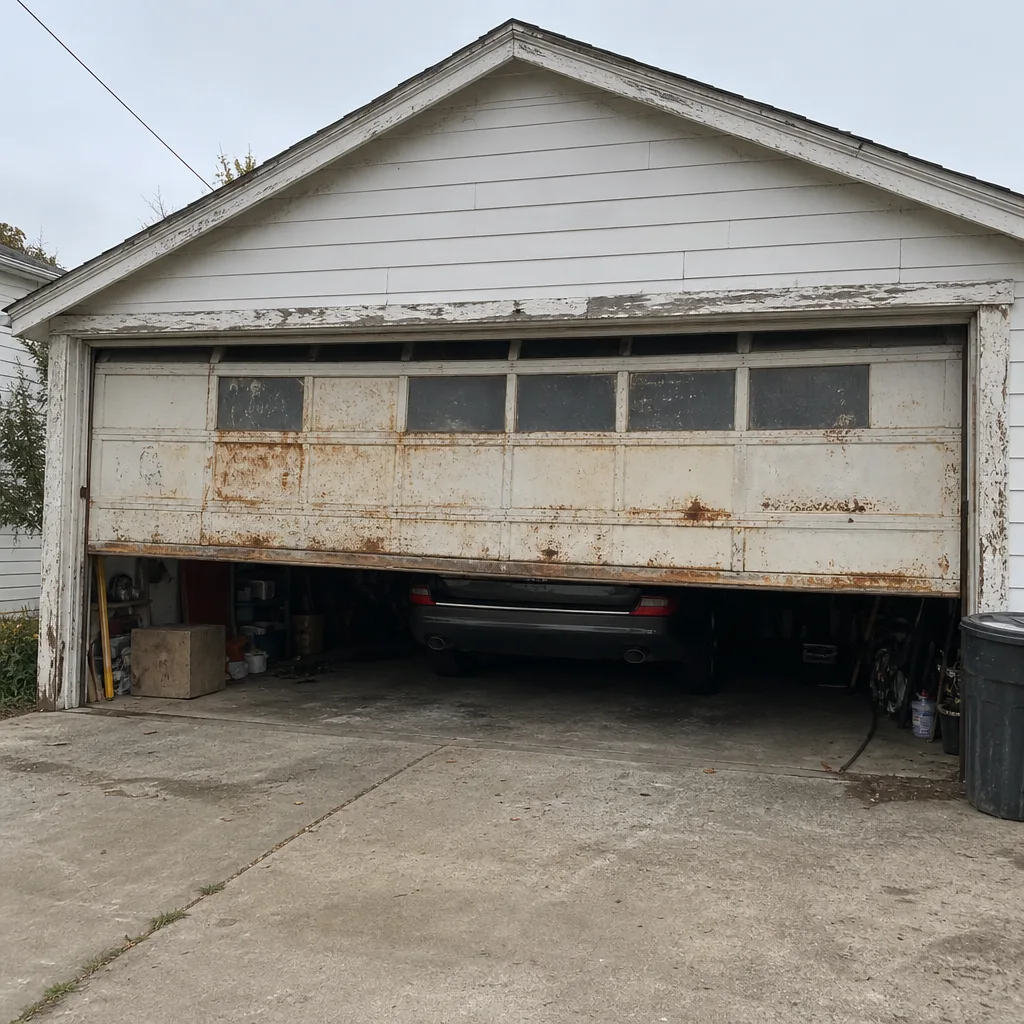 Before
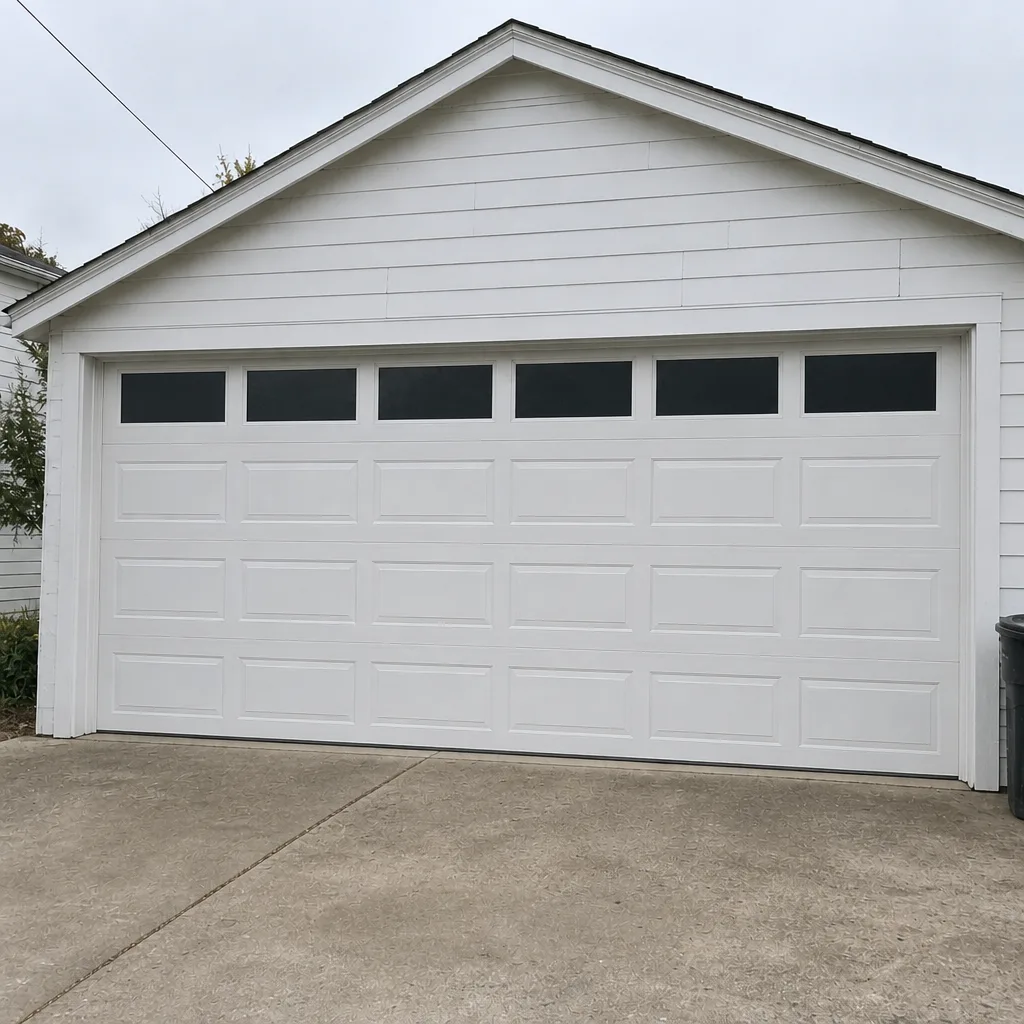 After
Frequently Asked Questions
Massachusetts doesn’t issue a garage door-specific trade license, so there’s no state license number to check for spring or opener work. What you can and should verify is that the business is registered to operate and carries insurance, and ask your city’s building department about any permit requirements for your job. Since the state doesn’t screen technical skill, your own questions during a call are the real filter. Call (877) 367-9149 for a free estimate and ask us anything you’d want a contractor to answer.
A single torsion spring replacement typically runs $150-$350 in East Boston, and a matched pair is usually replaced together at about twice that, so roughly $300-$700 depending on spring size and door height. These are estimates; the written quote after an in-person inspection sets the final price, agreed before work begins. Call (877) 367-9149 for an exact quote.
Ask directly whether they have the part for your specific door on hand or need to order it, and expect a clear yes or no. A company that keeps common parts in inventory answers quickly; one that orders everything will confirm a lead time. For a same-day fix, that distinction decides the whole timeline. Call (877) 367-9149 and we’ll tell you what we can do for your door.
It shouldn’t. A written estimate produced after an in-person inspection, and agreed before any work starts, is the price you pay. Ask the technician upfront if anything could change the number and what would cause it. Prices we quote are estimates until that written quote is in your hand, and then they’re the number. Call (877) 367-9149 for a free estimate in East Boston.
We work on the major brands across the board, including Genie, Clopay, Amarr, Wayne Dalton, and the rest, along with smart and legacy openers, so no job gets turned away over the nameplate. East Boston has a wide mix of door ages and systems, and a technician who’s seen your specific system before matters as much as the brand itself. Call (877) 367-9149 and tell us what’s on your door.
Same-day service depends on the job and what’s involved, so the honest answer is to call and ask. A repair we can complete on the spot may be possible the same day, while a replacement that needs measured parts and ordering will be scheduled. Either way, the price is quoted and agreed before any work begins. Call (877) 367-9149 and we’ll give you a straight answer on timing.
Related Services and Guides
If your door needs attention now, the fastest path is a call, but these pages cover the specific repairs and projects in more detail. Start with an overview of East Boston Garage Door Repair to see the full range of work, then go deeper on the garage door repair we handle for springs, cables, tracks, and panels. If the opener is the problem, the safety reverse test and calibration work is covered in our guide to garage door opener repair, and if a new door is on the table, our garage door installation page walks through measuring, ordering, and fitting around the tight lots and older garages common around East Boston.
The Bottom Line
The core lesson is simple: Massachusetts leaves garage door work largely unregulated, so your questions do the work a license would otherwise do. Confirm registration and insurance, ask brand-specific questions before anyone arrives, insist on an itemized quote after an in-person inspection, and find out whether parts are stocked or ordered. Read reviews for local signals, check the address, and walk from anyone quoting blind or rushing a signature. Do those things and you’ll hire a trained technician instead of a gamble. East Boston Garage Door Repair offers free estimates in East Boston. Call (877) 367-9149 for yours.
Written by the team at East Boston Garage Door Repair.