Last updated November 21, 2026
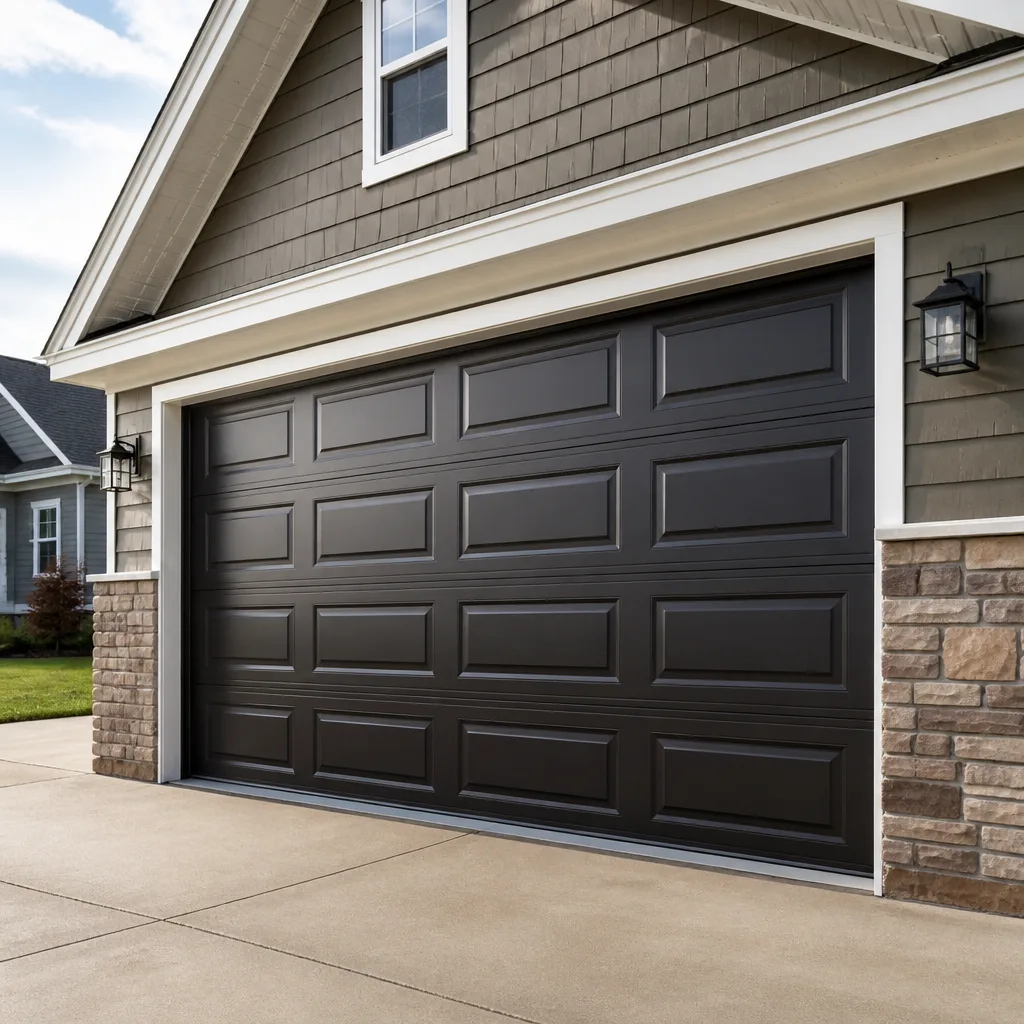 Raised-panel steel
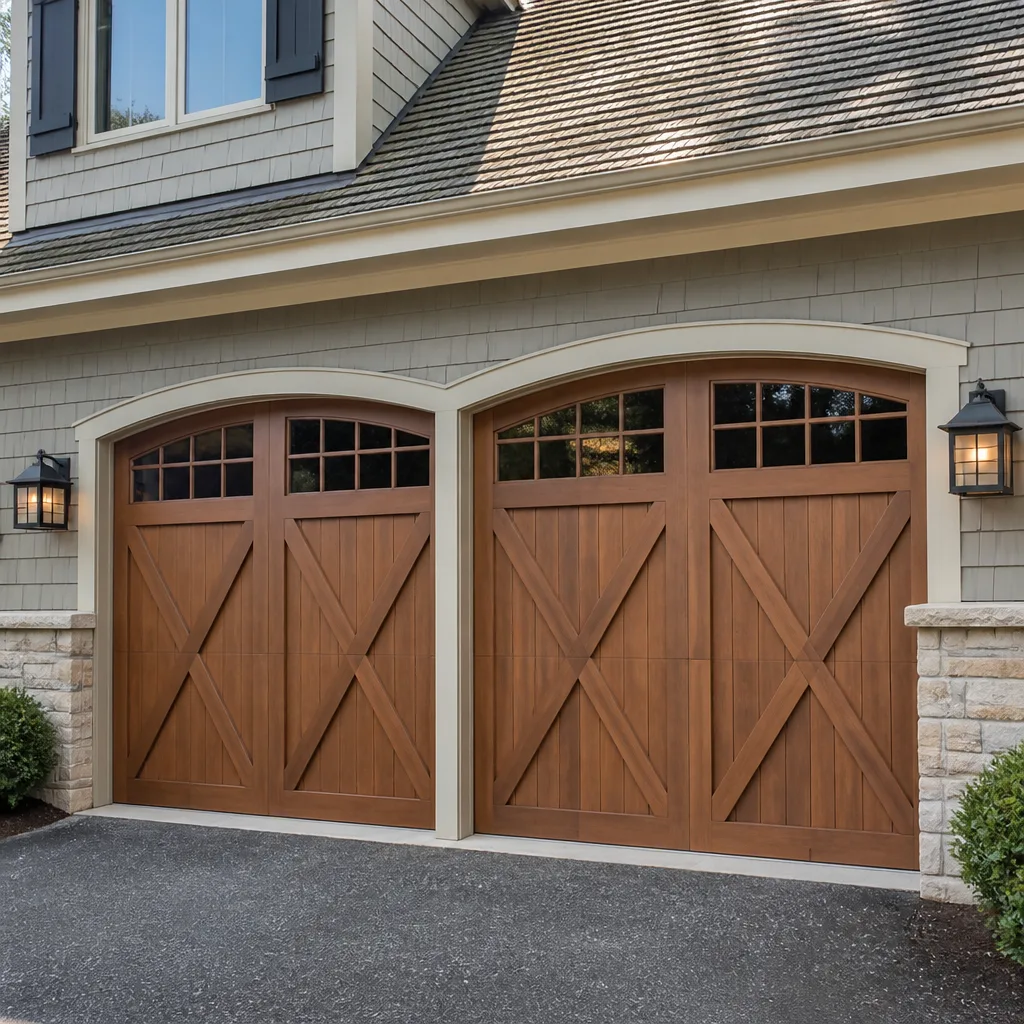 Carriage house
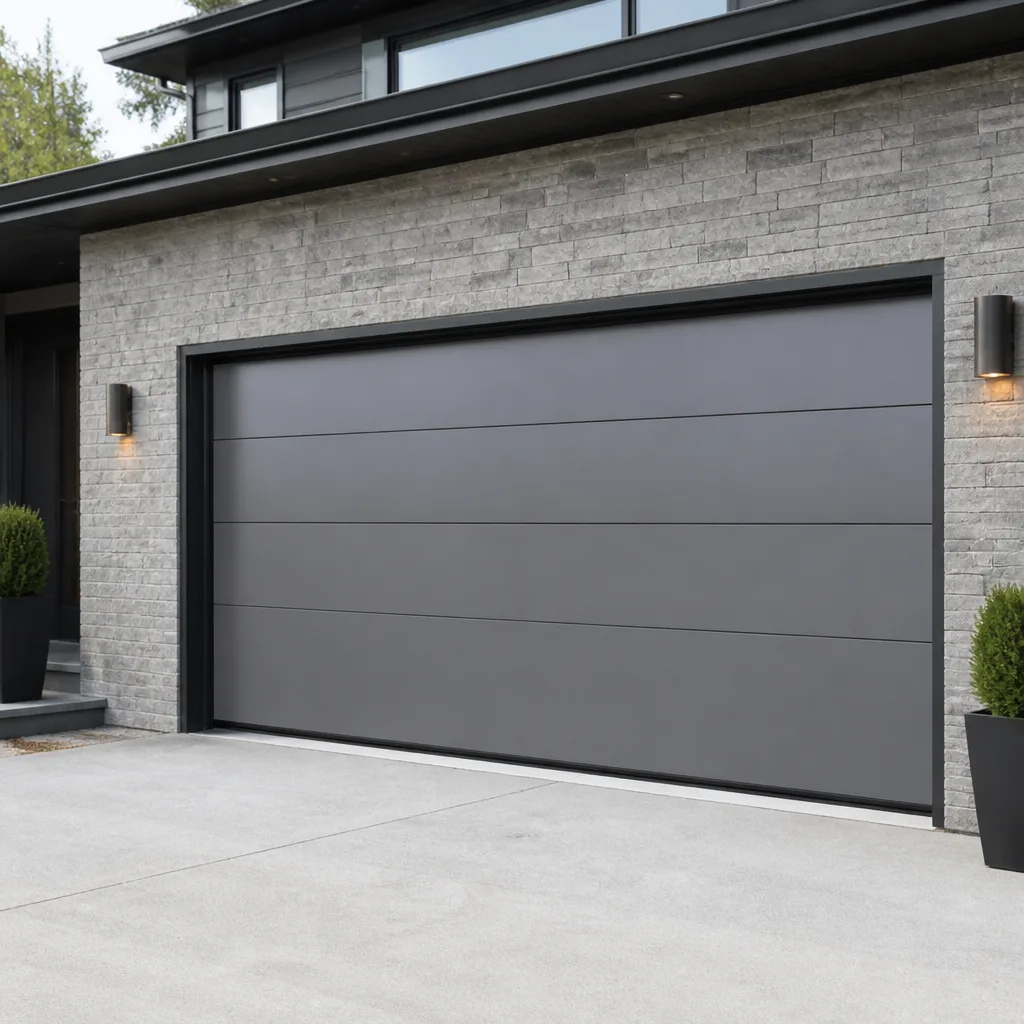 Modern flush
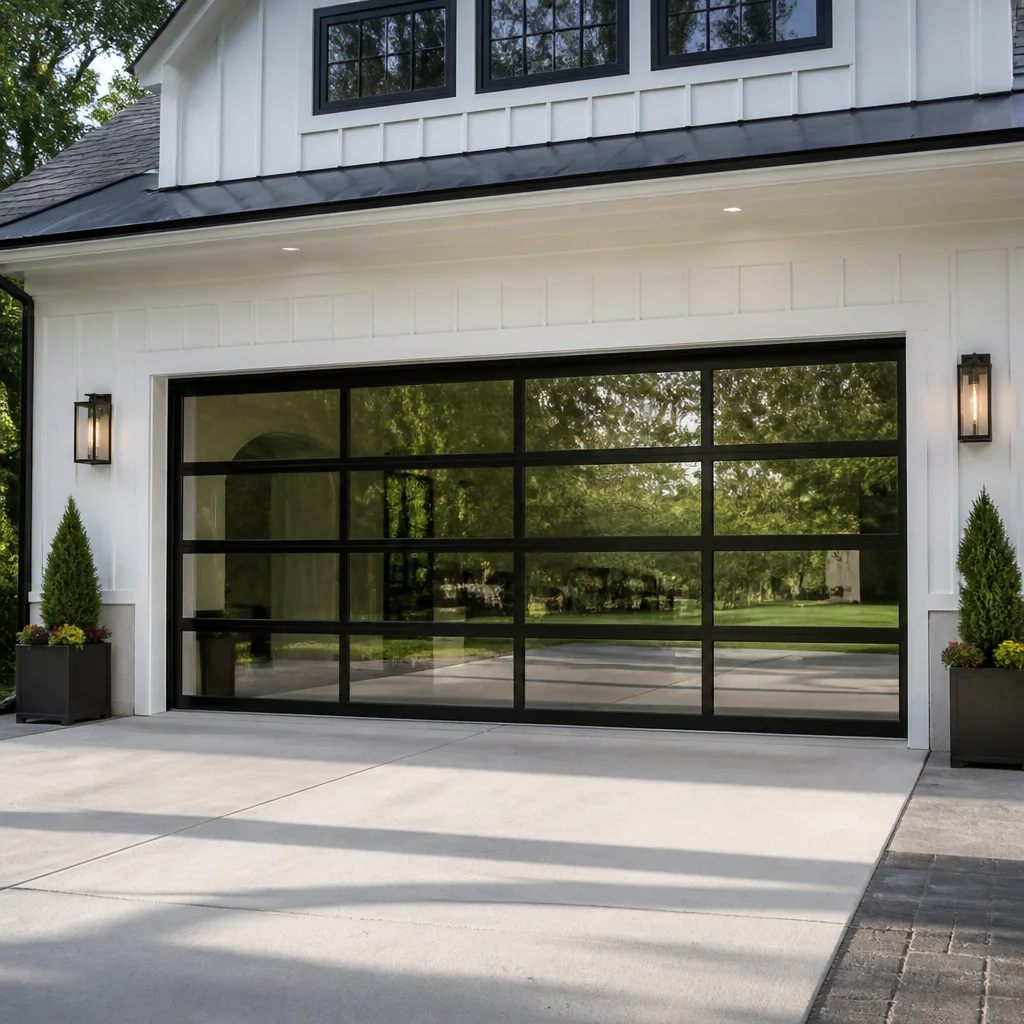 Full-view glass
 LiftMaster openers
 Chamberlain openers
Full 25-point door and opener safety check with every visit - springs, cables, rollers, tracks, and your LiftMaster or Chamberlain opener included
You get a price before we start. It does not change when the pro arrives.
Get your free estimateGarage Door Warning Signs: An East Boston Homeowner’s Reference Guide
A garage door that hesitates for two seconds before it moves isn’t “getting old.” It’s telling you the torsion spring is losing tension and may have only 60 to 90 cycles left before it snaps. The signs are readable if you have the translation. That’s what this guide is for. We’ve spent years reading those signs on doors across East Boston, from the triple-deckers near Maverick Square to the single-family homes up around Eagle Hill, and the pattern is always the same: the door warns you before it fails. What follows is a reference you can come back to, symptom by symptom, so you know what your door is telling you and how urgent it actually is.
Quick Answer
A failing garage door almost always gives warning first: unusual sounds (grinding, popping, squealing, thudding), uneven or slow movement, visible staining or coil gaps on the springs, and opener error codes. Grinding usually points to the opener’s drive gear, popping to a fraying cable, and a thud or bang to a broken spring. Sounds and movement problems are early warnings you can schedule; a snapped spring, a door hanging crooked, or a cable off its drum means stop using the door until a technician inspects it.
Styles & brands we work with
- Raised-panel steel
- Carriage house
- Modern flush
- Full-view glass
- LiftMaster openers
- Chamberlain openers
Table of Contents
- What Each Garage Door Sound Is Telling You
- Movement Problems and What They Mean
- The Visual Warning Catalog
- Opener Behavior Flags
- Schedule It This Week vs. Stop Using the Door
- Why East Boston Doors Show These Signs
- What You Can Check Yourself (and What You Can’t)
- Prevention: Keeping Warnings From Turning Into Failures
What Each Garage Door Sound Is Telling You
Sounds are the most reliable early warning a garage door gives, and each one maps to a specific part. Learn the four main sounds and you’ll know roughly what’s wrong before anyone lifts a wrench. Here’s the translation:
- Grinding: usually the opener’s drive gear. On chain-drive and screw-drive units the gear wears down over time, and the teeth start skipping against each other. The grinding gets worse under load, so it’s loudest on the way up.
- Popping or snapping: a fraying cable. The strands of a steel lift cable start to break one by one, and the cable pops as it passes over the pulley or drum. This is a stop-and-call sound, because a cable that lets go under tension is dangerous.
- Squealing: a worn nylon roller or a dry hinge. Nylon rollers flatten and start squealing against the track, and hinges that haven’t been lubricated squeal on every cycle. Quieter, but worth fixing before it wears the track.
- Thudding or a single loud bang: a broken spring coil. Torsion springs rarely fail gradually in one dramatic moment; individual coils can crack first, which is why you sometimes hear a thud and the door still opens a few times before it stops.
A fifth sound worth knowing: a rhythmic clicking that changes with door speed. That’s usually a loose track bolt or a roller with a flat spot, and it’s a “schedule it” issue rather than an emergency.
The key point is that sounds arrive before failures. A grinding drive gear gives you days or weeks of warning. A popping cable gives you less. A thudding spring is the last warning before the door won’t move at all. In East Boston, where winters are cold and doors cycle hard, we hear these sounds most often in the weeks after the first hard freeze. If any of them sound familiar, our garage door repair team can pinpoint the part before it fails.
Movement Problems and What They Mean
Movement tells you about balance, alignment, and the mechanical health of the door as a whole. A healthy door moves smoothly, at a steady speed, and closes flush against the floor. Anything else is a symptom. Here’s how to read the common ones:
- Uneven travel (one side higher than the other): a broken or stretched spring on one side, or a cable that’s off its drum. The door is now being lifted unevenly, which stresses the panels and the track.
- Slow on one side: a worn roller or a bent track on that side. The door drags, and the opener works harder. Left alone, it burns out the opener.
- Shuddering on descent: worn rollers, a misaligned track, or a door that’s out of balance. If the door shudders going down but not up, suspect the bottom section and the rollers closest to the floor.
- Reversing mid-close: the safety sensors are misaligned, blocked, or failing, or the opener’s travel limits are off. This is a safety system doing its job, but it means the door won’t close when you need it to.
You can test balance yourself, safely, with the opener disconnected and the door fully closed: lift it halfway by hand. A balanced door should stay there or drift slowly. If it slams down or won’t stay up, the springs are losing tension and a technician needs to look at it before the opener keeps forcing it. Don’t test this on a door that’s already showing popped cables or a crooked panel.
Movement problems are the ones East Boston homeowners most often describe as “it’s just a bit stiff.” Stiffness is a warning. If your door shudders or drags, our garage door opener repair team can tell you whether the opener is being overworked or the door itself is out of balance.
The Visual Warning Catalog
Some warnings are things you can see from the driveway or the edge of the garage. A two-minute look at the right spots catches most of them. Check these four areas:
- Rust-orange staining below the cable drums: a sign that a cable is fraying or the drum is binding. The staining is rust from worn steel. Any staining on the drum or the cable itself is a “stop using the door” flag.
- Coil gaps in torsion springs: a torsion spring should look like a tight, even coil. A visible gap between coils, or a coil sitting at a slight angle, means the spring is failing. This is the most common cause of a sudden bang and a door that won’t lift.
- Bottom corner panel cracks: the bottom section takes the most abuse, and hairline cracks at the corners are the early sign of structural fatigue. On a steel or wood door, a cracked bottom panel can let water in and rust the frame.
- Weatherstripping pulling away from the jamb: the rubber seal along the sides and bottom is what keeps cold air, water, and pests out. Pulled-away stripping is a small fix that prevents a bigger one, especially in East Boston’s freeze-thaw winters where water gets behind a loose seal and freezes.
One more visual check: look at the tracks. They should be straight and parallel. A dent or a bend in the track is often from a door that’s been hit or a roller that’s jumped, and it will cause the door to bind.
If you see staining, gaps, cracks, or a bent track, write down what and where. That’s the kind of note a technician can act on quickly. In East Boston, where many garage doors face the alley or the street and take weather head-on, the visual checks matter even more.
Opener Behavior Flags
The opener has its own language. Modern openers, especially smart-home models, report problems through lights, beeps, and how they behave. Here’s what to watch:
- The two-flash error code on LiftMaster units: two flashes usually point to a safety-sensor problem, often a misaligned or obstructed photo eye. If the sensors look clean and aligned and the code persists, the sensor wiring or the logic board needs a look.
- Chamberlain openers reversing at the floor even with a new bottom seal: if you’ve replaced the seal and the door still reverses, the opener’s travel limits or force settings are off, or the safety sensors are being triggered intermittently. A new seal won’t fix a limit problem.
- A Genie motor that runs but doesn’t move the door: the motor is spinning but the drive gear or the belt/chain is slipping or stripped. On some models the carriage or the trolley has disengaged. The motor is fine; the connection between motor and door isn’t.
We work on LiftMaster, Chamberlain, Genie and Craftsman openers regularly, including the app-connected models that depend on a WiFi bridge and the older units still doing their job. The smart openers add a wrinkle: a “door not responding” alert in the app is often a WiFi or bridge problem, not a door problem. Check the app’s last-known state before you assume the door is broken.
Opener flags are among the easiest warnings to misread. A door that reverses at the floor isn’t “being difficult”; it’s the safety system working. A motor that runs but doesn’t lift isn’t “dead”; it’s disconnected. If you’re seeing any of these, our team can run diagnostics and tell you whether it’s the opener, the door, or both.
Schedule It This Week vs. Stop Using the Door
The hardest part of reading warning signs is knowing which ones are urgent. Here’s a practical sorting rule:
Stop using the door until it’s fixed if:
- You heard a loud bang or thud and the door won’t lift.
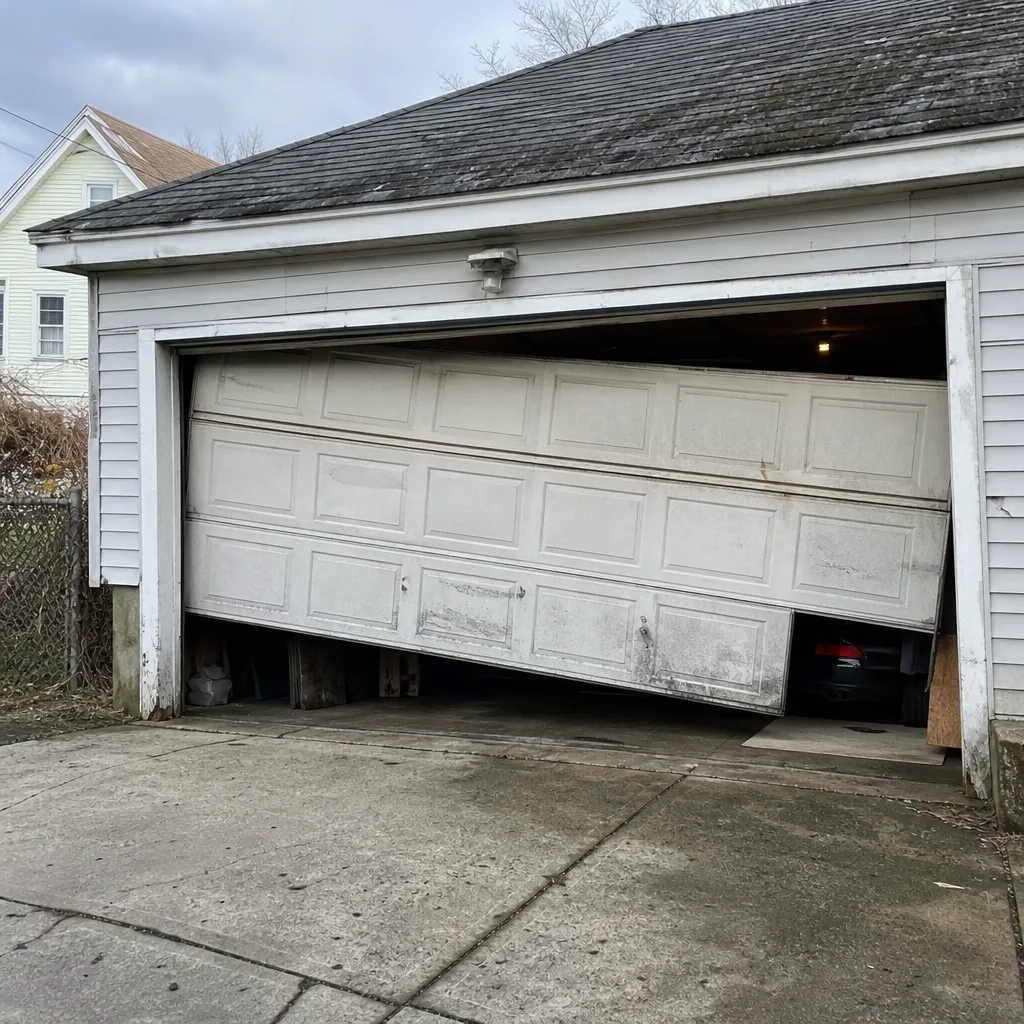
- The door is hanging crooked or one side is visibly lower.
- You see a cable off its drum, frayed, or rust-stained.
- You see a gap or a break in a torsion spring coil.
- The door reverses or stops partway and won’t close.
Schedule it this week if:
- You hear grinding, squealing, or rhythmic clicking but the door still moves.
- The door shudders or runs slow on one side.
- You see rust staining or weatherstripping pulling away.
- The opener shows an error code but the door still responds.
- The door is out of balance on a manual lift test.
The logic is simple: anything involving a broken or stressed spring, a cable, or a door that’s no longer hanging square is a stop, because those components are under high tension and can injure. Anything that’s noise, drag, or a minor visual is a schedule. When in doubt, stop and call. In East Boston, this distinction matters most in the cold months, when a stressed spring is more likely to go and a door that’s stuck open is a real problem.
If the door is stuck open or won’t move and you need it secured, call for repair. If it’s a noise or a drag, our garage door installation team can also assess whether a repair or a replacement is the better call for an older door.
Why East Boston Doors Show These Signs
East Boston’s housing stock and weather put specific stresses on garage doors. The neighborhood is full of older homes, many with garages that were added or modified over the years, and the doors on them range from modern LiftMaster and Chamberlain openers to older Craftsman and Raynor systems. That mix means warning signs vary by system age and by how the door was installed.
The climate is the bigger factor. East Boston winters bring repeated freeze-thaw cycles, and that affects doors in a few ways:
- Springs and cold: metal contracts in the cold, and a spring that’s near the end of its life is more likely to fail in a cold snap. The thudding-spring warning is most common in the first weeks of winter.
- Weatherstripping: freeze-thaw works loose seals. Water gets behind a pulled-away strip, freezes, and pushes it further out. Check the bottom seal and the side jamb seals each fall.
- Track alignment: the ground heaves in freeze-thaw, and a garage with a settling slab or a shifting frame can pull a track out of square. A door that suddenly starts dragging in winter is often a track problem, not a spring problem.
- Roller wear: cold makes nylon rollers stiffer and more prone to squealing and flat-spotting.
Neighborhood context matters too. Denser areas with alley-facing garages and shared driveways see more door cycles and more accidental impacts. Out toward the water and the older sections of East Boston, doors that face the weather directly show the visual warnings first.
None of this is unique to one street or one house. It’s the general pattern of how doors age in East Boston, and it’s why a fall inspection and a spring inspection make sense here.
What You Can Check Yourself (and What You Can’t)
Some checks are safe for any homeowner. Others are not, and the line is clear: anything involving the springs, the cables, or the electrical side of the opener is a job for a trained technician. Here’s the safe list:
- Visual inspection: look at the springs, cables, tracks, rollers, and weatherstripping from a safe distance. Note anything that looks stained, cracked, bent, or gapped.
- Listen: run the door and note the sounds. Grinding, popping, squealing, thudding.
- Check the safety sensors: make sure the photo eyes on each side of the door are clean and aligned, and that nothing is blocking them.
- Test the balance: with the opener disconnected and the door fully closed, lift it halfway by hand. It should stay put or drift slowly. Don’t do this if you see a broken spring or a cable problem.
- Check the opener’s error codes: look up the code in the opener’s manual or the brand’s support page.
Do not try to adjust, remove, or replace a torsion spring or a lift cable yourself. Those parts are under high tension, and a spring or cable that lets go can cause serious injury. Don’t try to straighten a bent track with the door under tension either. And don’t open the opener’s electrical housing. For all of that, call a technician. If you want to handle a smaller repair yourself, we can supply the parts directly so you’re working with the right component.
In East Boston, the most common DIY mistake we see is a homeowner replacing a bottom seal or a roller and assuming the door is now fine, when the real problem is a spring that’s lost tension. A new seal won’t fix a balance problem.
Prevention: Keeping Warnings From Turning Into Failures
Most of the warning signs in this guide are preventable with a small amount of routine care. Here’s a simple routine that fits an East Boston climate:
- Twice a year, inspect: springs, cables, tracks, rollers, and weatherstripping. Fall and spring are the right times here.
- Lubricate the moving parts: hinges, rollers, and the track. A dry door squeals and wears faster.
- Keep the tracks clean and clear: debris in the track causes drag and roller wear.
- Watch for balance changes: a door that used to stay put and now drifts down is losing spring tension.
- Check the seal each fall: replace weatherstripping that’s pulling away before freeze-thaw makes it worse.
If you’re not comfortable doing the checks yourself, a professional inspection is a small cost against a snapped spring or a burned-out opener. Parts are available directly from us if you’re a hands-on homeowner who wants to do your own lubrication and minor replacements.
Common Mistakes to Avoid
- Ignoring a grinding sound because the door still opens. A grinding drive gear is a warning, not a nuisance. Left alone, it strips the gear and the opener stops entirely, usually at the worst time.
- Replacing a bottom seal to fix a reversing door. If a Chamberlain opener still reverses at the floor after a new seal, the problem is the travel limits or the sensors, not the seal. Fix the cause, not the symptom.
- Forcing a crooked door closed. A door that’s hanging unevenly is stressing its springs and cables. Forcing it can turn a repair into a replacement, and it can be dangerous.
- Treating a smart-opener app alert as a door failure. A “not responding” alert is often a WiFi bridge problem. Check the app and the opener before you assume the door is broken.
- Skipping the fall weatherstripping check. In East Boston, a loose seal lets water in, freeze-thaw pushes it further out, and by spring you’ve got a rusted frame and a bigger repair.
- Assuming an old door needs replacing when it needs a repair. Age alone isn’t the test. A well-maintained older door with a Craftsman or Raynor opener can outlast a poorly maintained newer one.
- DIY on the springs. This is the one mistake that can cause serious injury. Springs and cables are under high tension and belong to a trained technician.
See the difference
 Before
 After
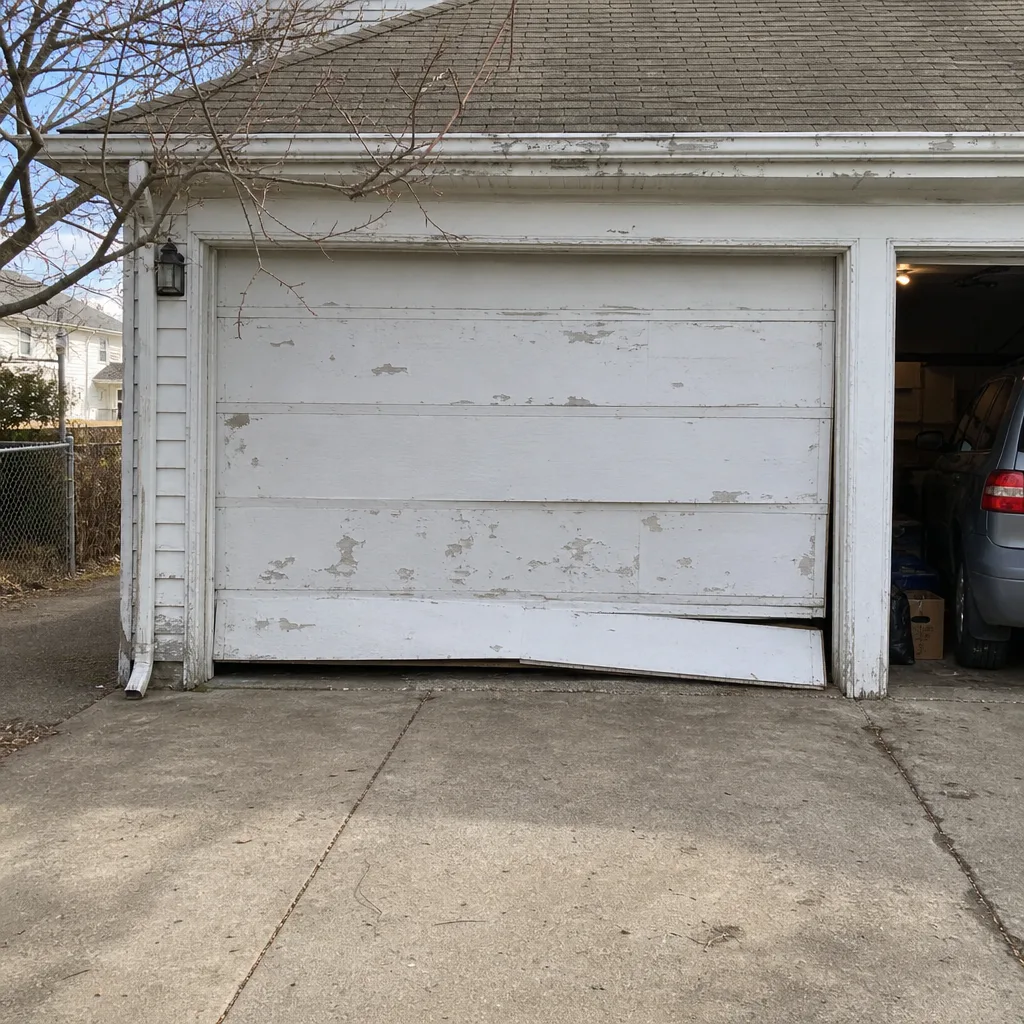 Before
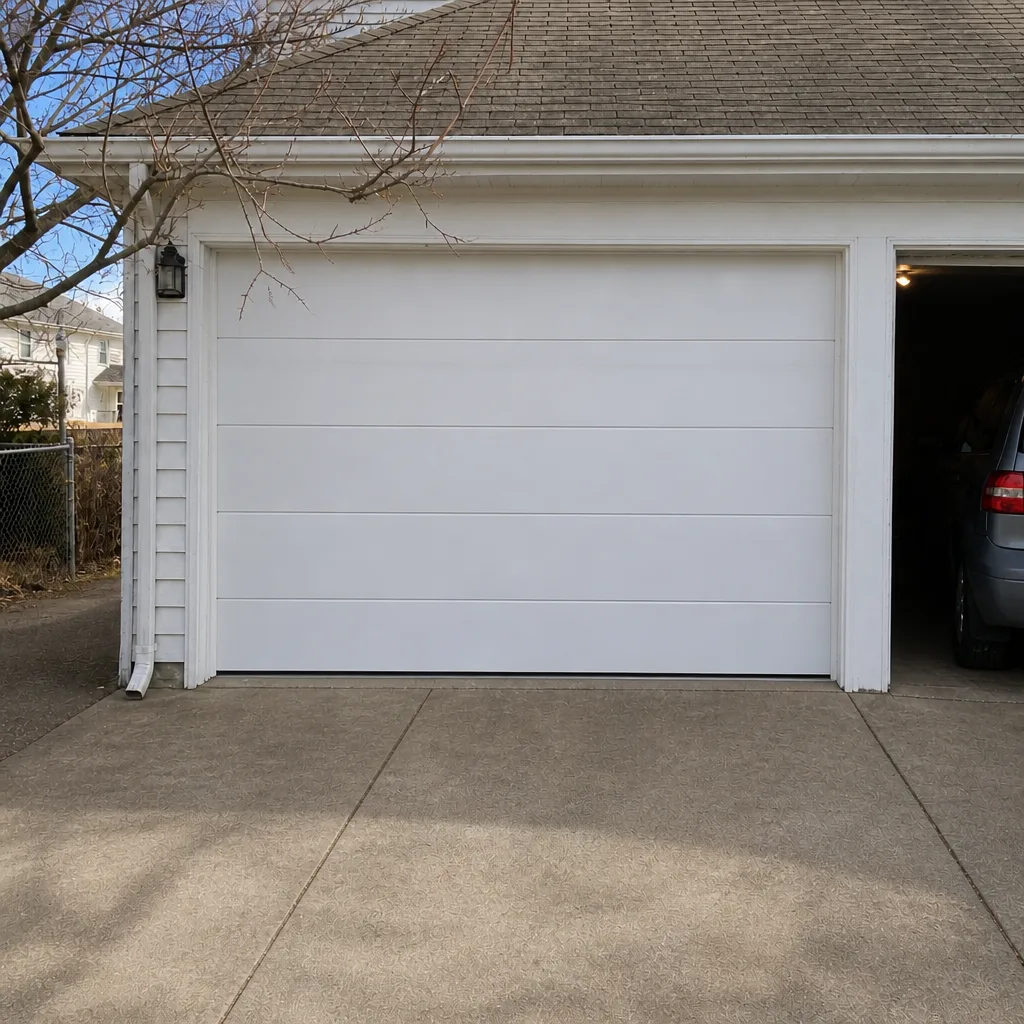 After
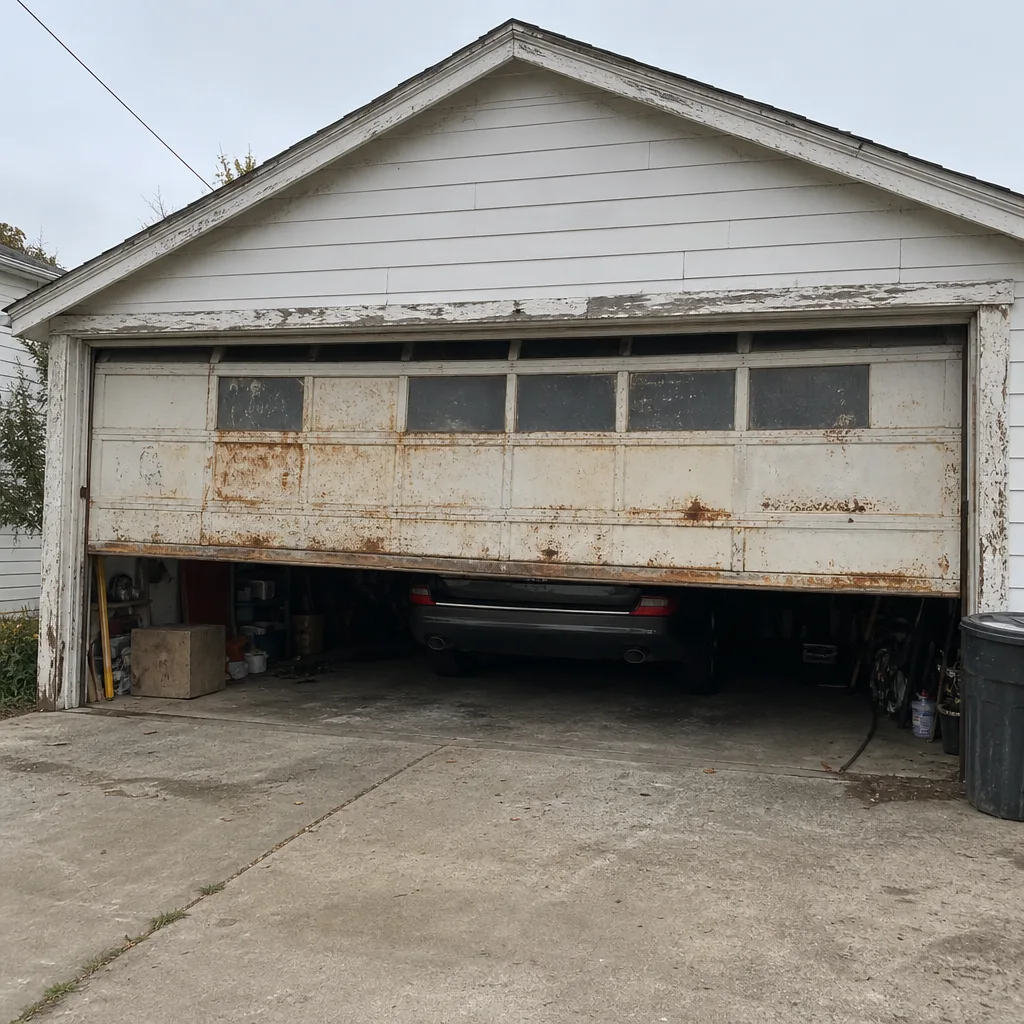 Before
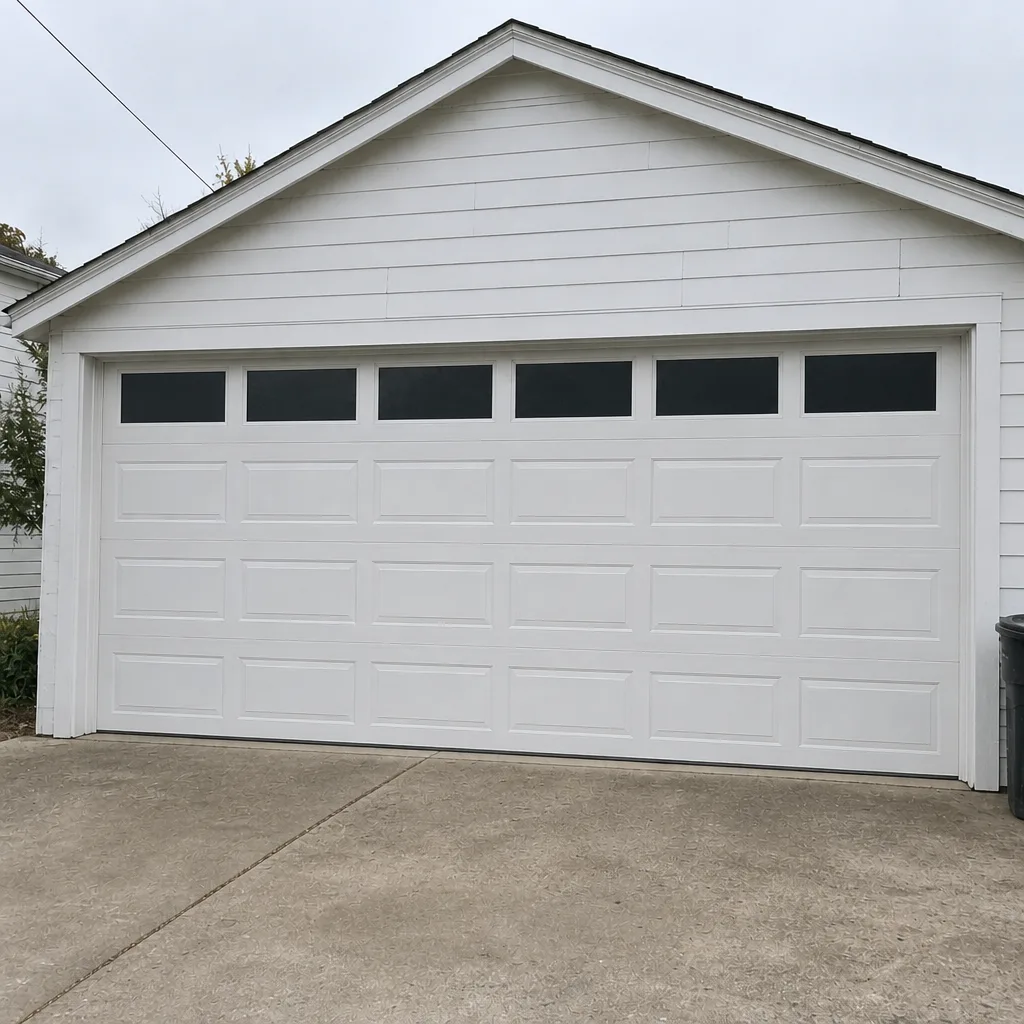 After
When to Call a Professional
Call a professional when you hear popping or a bang, see a cable off its drum or rust-stained, see a gap in a spring coil, or the door hangs crooked or won’t close. Those are the stop-using-the-door signs. Also call when the opener shows a persistent error code, when the door shudders or drags, or when you’re not sure whether a noise is serious. Our technicians have up to 15 years of experience reading these signs, and we work on LiftMaster, Chamberlain, Genie, Craftsman, Clopay, Amarr, Wayne Dalton and Raynor systems. East Boston Garage Door Repair offers free estimates in East Boston. Call (877) 367-9149 for a free estimate, and we’ll tell you which warnings need action this week and which can wait.
Frequently Asked Questions
The first warning signs are usually sounds and movement changes: grinding, squealing, or a door that hesitates before it moves. Visual signs like rust staining below the cable drums or a gap in a torsion spring coil come next. If you hear or see any of these in East Boston, call (877) 367-9149 for a free estimate.
Grinding usually means the opener’s drive gear is wearing out. On chain-drive and screw-drive units the gear teeth skip against each other, and the grinding gets worse under load. It’s a schedule-it-this-week repair, not an emergency, but left alone it strips the gear and the opener stops.
No. A door with a broken spring should not be used. The spring balances the door’s weight, and without it the opener or a person is lifting the full weight of the door, which can cause injury. Call for repair before using it again.
A Chamberlain opener reversing at the floor is usually a travel-limit or safety-sensor problem, not a bad bottom seal. If a new seal didn’t fix it, the opener’s limits or sensors need adjustment. Call (877) 367-9149 and we’ll diagnose it.
Often, yes. Age alone isn’t the test; condition and balance are. A well-maintained older door with a Craftsman or Raynor opener can last longer than a neglected newer one. We’ll tell you which one actually makes sense for your door.
Twice a year, in fall and spring, is a good routine here. The freeze-thaw winters stress springs, weatherstripping, and track alignment, so a fall inspection before the cold and a spring inspection after it catches most warnings early.
The Bottom Line
Your garage door warns you before it fails, and the warnings are readable: sounds point to specific parts, movement changes point to balance and alignment, visual signs point to springs and cables, and opener codes point to limits and sensors. The rule is simple: broken springs, popped cables, crooked doors, and doors that won’t close are a stop; grinding, squealing, drag, and minor visual wear are a schedule. In East Boston, check twice a year, keep the moving parts lubricated, and treat a new noise as a message. Read the sign, act on it early, and the door keeps doing its job. Call (877) 367-9149 for a free estimate and we’ll help you translate whatever your door is saying.
Written by the team at East Boston Garage Door Repair.